
Why the Body Keeps the Score
Understanding what happened to you is not the same as recovering from it. The body stores the experience of racialised workplace harm in ways that cognitive understanding alone cannot reach. Somatic trauma describes what lives in the body after sustained exposure to an extractive environment. This article explores what that means, why it matters, and what working with it requires.
Beyond Understanding
At some point, many Black professionals reach an understanding. They name the mechanisms they have been navigating. They find language for the pattern. They read the research, recognise their experience in it, and feel the clarity that comes from an accurate account of what has been happening.
And then they go back to work on Monday. And the body braces.
Cognitive understanding matters. It reframes experience. It removes the weight of misattribution, the sense that the problem was personal, that you were not good enough, not resilient enough, not the right fit. Understanding what the Excellence Tax is and how it operates is genuinely valuable.
But understanding does not release what the body has stored. The jaw that holds tension in professional spaces. The shallow breathing that begins in the lift on the way to a difficult meeting. The shoulders that do not fully drop until Friday evening, and sometimes not even then. The bracing that happens automatically, without decision, before walking into a room where you know you will be the only Black person present.
These are not psychological symptoms. They are somatic ones. They live in the body, in the nervous system, in the patterns of muscle tension and breath and posture that the body has learned over years of navigating an environment that made specific and sustained demands.
Addressing them requires working at the level where they live.
What Somatic Trauma Is
The word somatic comes from the Greek for body. Somatic trauma describes the way traumatic experiences become stored not only in memory and cognition, but in the body’s own systems: the nervous system, the musculature, the breath, the patterns of activation and response that the body develops in response to repeated threat.
The foundational insight, developed across decades of clinical research by practitioners including Peter Levine, Bessel van der Kolk, and Resmaa Menakem, is that trauma is not only a psychological event. It is a physiological one. The body experiences threat. The body responds to threat. And when the threat is sustained, repeated, or unresolved, the body retains the response patterns it developed to manage it.
For Black professionals navigating racialised workplace environments, the relevant question is not whether a single incident constitutes trauma in the clinical sense. The relevant question is what happens to the body across years of sustained exposure to the specific demands of those environments. Years of code-switching. Years of pre-editing communications to manage the threat of tone policing. Years of hypervigilance in meetings where scrutiny is unevenly distributed. Years of composure performed under conditions that do not warrant it.
The body learns from all of it. And what it learns, it keeps.
What the Research Shows
The Excellence Tax research documents the somatic dimension of racialised workplace harm across the dataset, drawing also on Natasha Williams’ somatic trauma-informed practice and the established clinical literature on racialised trauma.
78% of Black professionals in our study describe physical sensations they associate specifically with racialised workplace experiences, distinct from general work stress.
The sensations described are specific and consistent across respondents. Chest tightening in particular meetings or with particular people. A holding of breath that happens automatically in certain professional spaces. Nausea before performance reviews. Physical bracing that precedes interactions with specific colleagues or managers. Fatigue that is localised to racialised professional demands rather than to workload generally.
These are not imagined responses. They are the body’s accurate record of experiences it has learned to anticipate.
64%
of Black professionals who have left corporate employment report that their bodies responded physically to leaving, before their minds had fully processed the decision.
This finding points to something important about how somatic experience operates. The body often knows before the mind articulates. Professionals who describe finally making the decision to leave frequently report a physical response to that decision: a release of tension, a change in breathing, a sense of weight lifting from a specific part of the body. The body was waiting for the decision the mind had not yet made.
What It Looks Like in Practice
Somatic trauma from racialised workplace environments presents in recognisable patterns. These patterns are worth naming precisely, because they are often misread as personality traits, anxiety disorders, or individual stress responses rather than what they actually are: the body’s rational and adaptive response to a specific set of sustained environmental demands.
The brace before the meeting
You know, before you enter the room, that you will be the only Black person present. You know the dynamic. You have navigated it many times before. And before you open the door, something happens in the body. The shoulders come up slightly. The breath becomes shallower. The jaw sets. The posture adjusts to a version of itself that is more contained, more controlled, more defended.
None of this is a conscious decision. The body has learned the environment and prepares accordingly. It draws on every previous experience of that environment and brings its accumulated learning to bear before the current experience has even begun.
This preparation has a cost. You enter the meeting already carrying a physiological load. Your body is managing a threat response while your mind is trying to contribute to a professional conversation. The quality of your presence in that room is already partially allocated elsewhere.
The voice that changes
Code-switching is well documented as a cognitive and emotional labour. Less discussed is its somatic dimension. Many Black professionals describe a physical shift that accompanies code-switching: a change in vocal register, a change in breath and rhythm, a change in how the body holds itself. The adaptation is not only linguistic. It is embodied.
Over years, this physical adaptation can become so automatic that the professional loses easy access to the embodied version of themselves that exists outside the professional context. The work version of the body becomes the default. The tension, the control, the contained posture become the resting state.
Recovery from this pattern requires more than stopping code-switching. It requires rebuilding the physical pathways back to an undefended embodied self. That is somatic work.
The weekend that does not restore
The physiological arousal that racialised workplace environments maintain does not switch off automatically when the working week ends. The body, conditioned to a state of alert, continues running that state regardless of whether the environment currently requires it.
This produces the experience that many Black professionals describe: weekends that provide surface-level rest but not genuine restoration. The body rests in the sense that it stops moving. But the nervous system stays activated. The shallow breathing continues. The background tension remains. And Monday arrives with a body that has not truly recovered from the previous week.
“I spent years thinking I was just not very good at relaxing. I blamed myself. Then I understood that my nervous system had been trained to stay alert. It was not a personal failing. It was a physical adaptation to an environment that had given it real reasons to stay watchful. Learning to switch off required actually teaching my body that it was safe to do so.”
Why Cognitive Understanding Is Not Enough
The insight that the body stores trauma alongside the mind produces a practical implication: approaches to recovery that work only at the cognitive level will produce incomplete results.
Therapy that focuses exclusively on narrative and understanding, on making sense of what happened and reframing its meaning, addresses the cognitive and emotional dimensions of the experience. It does not address what lives in the body. The tension pattern in the shoulders. The breath that stays shallow. The nervous system that remains in a state of activation regardless of what the mind understands.
This does not mean cognitive approaches are not valuable. They are. Understanding matters. Reframing matters. Making meaning of experience matters. The point is that these approaches work on one dimension of a multi-dimensional experience, and genuine recovery requires attending to the other dimensions as well.
Somatic approaches work at the level of the nervous system. They use breath, movement, posture, and body awareness to help the nervous system discharge stored threat responses and return to a regulated baseline. They rebuild the physical pathways that allow the body to access safety and rest. They address the adaptation the body developed for an extractive environment and help it learn that the environment has changed, even when the change has been internal rather than external.
Somatic Practice and the Excellence Tax
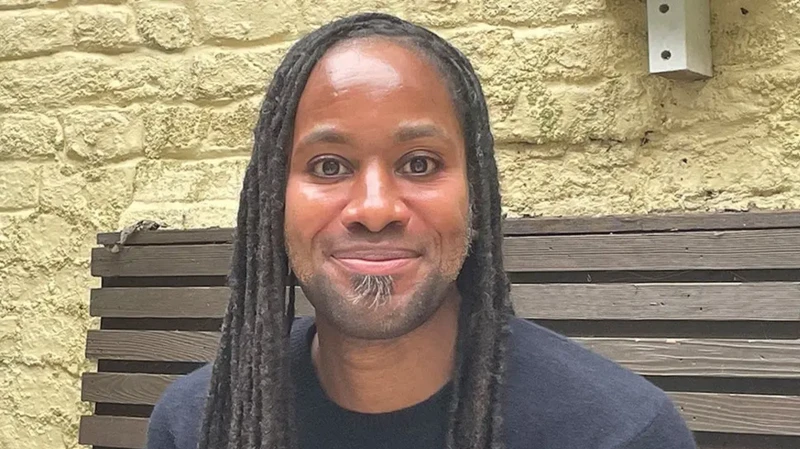
Natasha Williams brings somatic trauma-informed practice directly to the COBE approach to workplace healing. The work acknowledges the body as a site of professional harm and recovery as a process that needs to engage that site.
The somatic dimension of the Excellence Tax operates across several of the fifteen mechanisms. Tone policing produces a physical response: the body tightening in anticipation of how a communication will land. Microaggressions produce a physical response: the momentary freeze, the calculated composure, the energy required to maintain a professional surface over a threatened interior. Performance review bias produces a physical response: the weight of a rating that does not match the year, held somewhere specific in the body.
These are not metaphors. They are physiological events. Accumulated across hundreds of incidents per year, across years of a career, they produce the somatic patterns that recovery needs to address.
The COBE Community creates space for professionals to explore the somatic dimensions of their experience, with guidance from practitioners who understand both the clinical and the structural terrain. Join us here: [https://community.costofblackexcellence.com]
What Recovery Involves
Somatic recovery from racialised workplace trauma does not follow a linear path. It does not resolve in a fixed number of sessions or arrive at a definitive endpoint. It involves a gradual recalibration of the nervous system, a rebuilding of the body’s capacity for safety and rest, and a re-integration of the embodied self that the workplace required to be managed and controlled.
Several practices contribute to this recalibration.
Breath work addresses the breath patterns that sustained threat responses produce. Shallow, high chest breathing maintains physiological arousal. Slow, diaphragmatic breathing activates the parasympathetic nervous system, the rest and digest system, and begins to move the body out of the chronic activation state that racialised workplace environments maintain. Regular practice rebuilds the nervous system’s capacity to access this state voluntarily.
Somatic awareness involves developing the capacity to notice what is happening in the body in real time: where tension lives, when it activates, what triggers it, and what releases it. This awareness creates a point of choice that automatic, unconscious physical responses do not provide. The brace before the meeting can be noticed, named, and worked with rather than simply enacted.
Movement practices that focus on releasing rather than performing are particularly valuable for Black professionals whose bodies have been in performance mode for extended periods. The body that has spent years managing its presentation in professional spaces needs opportunities for uncontrolled, expressive, non-evaluated movement. What this looks like differs from person to person.
Community and co-regulation matter at the somatic level. The nervous system is not a solitary organ. It co-regulates with the nervous systems of the people around it. Being in community with people whose nervous systems are not in a state of racial stress, who do not require you to manage your presentation, who respond to your presence with recognition and ease rather than with the low-level threat that extractive environments produce, produces genuine physiological restoration. This is one of the reasons the COBE Community matters beyond its value as a space for shared understanding.
What Organisations Must Do
Organisations that take the somatic dimension of racialised workplace harm seriously need to move beyond standard wellbeing provision.
Commission somatic trauma-informed practitioners to work with Black professionals directly. Employee assistance programmes that offer cognitive behavioural therapy to Black professionals experiencing somatic trauma from racialised workplace environments are providing an incomplete resource. Organisations committed to genuine wellbeing provision need to make somatic approaches available as part of their support offer.
Address the sources of somatic activation, not just the symptoms. Physiotherapy for back pain caused by poor ergonomics and physiotherapy for back pain that the stress response is maintaining are different treatments for different causes. Similarly, wellbeing support for Black professionals that does not address the racialised environmental causes of their somatic symptoms treats the symptom and ignores the cause.
Create environments where Black professionals can be embodied. Environments that require constant self-monitoring, constant performance of composure, and constant management of how you are perceived generate somatic activation as a structural feature. Creating conditions in which Black professionals can be present without sustained self-management requires changing the cultural norms that currently demand it.
The Full Picture
Somatic trauma, racial battle fatigue, and the weathering effect are three dimensions of the same experience. They develop together. They reinforce each other. And they require approaches to recovery that attend to all three dimensions simultaneously.
The cognitive understanding that the Excellence Tax research provides is valuable and necessary. But it is the beginning of the work, not the end of it. Recovery from racialised workplace harm is a whole-body process, and it deserves whole-body attention.
The COBE Community holds space for professionals at every stage of that process. Whether you are still inside a corporate environment and beginning to understand what you have been carrying, or whether you have left and are working through what comes next, you will find people here who understand what recovery from this terrain actually involves.
Join the COBE Community
You do not need to have left corporate employment to join. You do not need to have reached any particular stage of recovery. You need to be a Black professional who wants to be in community with others who understand this terrain without needing it explained.
Join the CommunityRead Next
- Back to the Workplace Healing hub: /workplace-healing
- Previous article: The Weathering Effect: /workplace-healing-weathering-effect
- Explore the Exodus hub: /exodus


 Natasha Williams