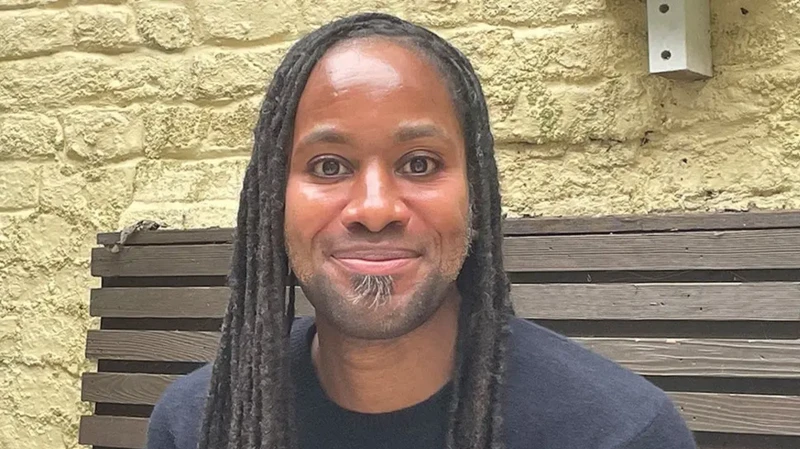

Yesterday, Professor Jason Arday was found dead at his home in London. He was 41 years old.
Nine days prior, he resigned from the University of Cambridge amid intense public scrutiny of his academic credentials, qualifications, and personal background. Police have stated that his death was unexpected but not suspicious. His family expressed their grief and indicated they believe a prolonged campaign of misinformation and harassment played a role in the pressures he experienced.
My condolences go to his wife, children, family, friends, students and everyone who knew him.
Last week, before any of us knew how this story would end, I wrote about Jason Arday and said I believed that resigning was the right decision.
I still believe that. My reasoning was about protecting his mental well-being. This had become too much for one person.
What I have watched since has left me deeply uncomfortable, because somewhere along the way we stopped discussing accountability and began watching the public destruction of a human being.
There is a difference.
Cambridge put him on a pedestal
Cambridge appointed Jason Arday and presented him to the world as an exceptional scholar.
They celebrated his appointment as the institution’s youngest Black professor and highlighted his extraordinary personal story.
The university benefited from the publicity.
Then serious questions emerged about his scholarship, qualifications and parts of his biography. Those questions warranted investigation. Arday denied dishonesty and intentional plagiarism, though some allegations remained contested.
But Cambridge also had a responsibility.
It was one of the most prestigious universities in the world when it recruited someone to a professorship.
Where was the due diligence?
Who checked his qualifications?
Who assessed the quality of his scholarship?
Who verified the claims Cambridge itself repeated?
Who decided he met the requirements for the position?
These questions are so significant that Cambridge agreed this week to an independent inquiry into his appointment.
So why did so much of the public spectacle become about one man?
Cambridge put him on a pedestal. When questions arose, he was allowed to fall from that pedestal in spectacular fashion.
There is no evidence Cambridge intended this outcome. But institutions have responsibilities for what happens when they turn individuals into symbols.
An internal investigation into legitimate concerns should have been possible without turning every aspect of someone’s life into public entertainment.
At some point this story became bigger than academic accountability.
People appeared determined to find the next thing.
His scholarship.
His qualifications.
His childhood.
His sporting achievements.
His charity work.
His personal history.
The story kept expanding.
There was a human being underneath all of this.
Why this level of scrutiny?
This is the question I cannot get away from.
How many people occupy significant positions in British public life whose competence, judgement or accounts of their experience have been questioned?
How many people have made serious mistakes?
How many institutions have failed?
How many political decisions have damaged this country?
How many people responsible have subsequently written books, appeared on television, given speeches and continued their careers?
We have watched extraordinary failures of governance in Britain.
We have watched public money wasted, watched scandals followed by inquiries, misleading political claims, and institutions protect themselves.
We have become almost accustomed to discovering that somebody somewhere knew something and failed to act.
Yet somehow this one Black professor became a national morality play.
Consider Rachel Reeves.
Questions were raised about inaccuracies in her professional history. Her LinkedIn profile had described her HBOS employment as “Economist, Bank of Scotland” before being changed to “Retail Banking, Halifax”. Questions were also raised about how long she had worked at the Bank of England. Her spokesperson later acknowledged inaccuracies in dates while Downing Street defended her.
Those questions were reported.
They did not consume her entire identity.
She remained Chancellor.
I am not arguing that Rachel Reeves should have been publicly destroyed.
I am arguing precisely the opposite.
Why do we accept proportionate scrutiny in some cases and public execution in others?
Why are some people allowed to explain, correct, defend themselves and continue?
Why do others become the story?
We have seen what public hounding does before
I thought about Caroline Flack while this whole thing was playing out.
Her circumstances were different, and we should not pretend the two cases are identical.
But I remember the atmosphere surrounding her before her death in 2020.
The headlines, commentary, the judgement and finally the humiliation.
The sense that the person at the centre of the story had disappeared behind the story itself.
After her death by suicide, conversations about media treatment, vulnerability and public shaming became unavoidable.
Then time passed.
And here we are again asking whether we understand what relentless public scrutiny does to people.
We do not yet know the cause of Jason Arday’s death. We should not speculate.
But we are still entitled to examine the culture surrounding what happened before he died.
We have to look at what we are doing to individuals if we say we care about people.
Black people are still being treated as a collective
This is where the racial dimension matters to me.
Jason Arday became a DEI story.
His appointment became evidence of diversity.
Then his difficulties became evidence against diversity.
I reject both.
Jason Arday was an individual.
Black people are individuals.
We are not a collective CV.
We do not possess collective qualifications.
We do not share collective competence.
We do not share the same experiences, abilities, politics, class, nationality, personality or professional standards.
If Jason Arday was unsuitable for a Cambridge professorship, that was an individual recruitment issue and an institutional governance issue.
It was not evidence about Black people.
Yet when a Black person occupies one of these positions, their race becomes attached to everything.
If they succeed, the institution celebrates diversity.
If they fail, people ask whether diversity put them there.
Either way, the individual disappears.
This is dangerous.
My research tells me Black professionals are already carrying too much
This story has affected me because it sits so closely alongside what I have been hearing through the Cost of Black Excellence research.
Black professionals tell me about continually having to prove themselves.
Working harder, adding another qualification, over-preparing and working through hypervigilance every day. Trying to become so competent that nobody has a reason to question whether they belong.
One senior professional described the Excellence Tax as the pressure to “over-perform, over-explain and constantly prove that I’m credible.”
The health data concerns me even more.
In one recent evidence cut of 1,150 respondents, 65.2% reported sleep disturbance or insomnia, 65% reported persistent fatigue or exhaustion, and 57.1% reported burnout or emotional collapse. More than 91% had considered leaving or had left a role to protect their mental or emotional well-being. These figures describe reported experiences rather than establishing that work caused every health outcome.
People are spending years accumulating qualifications and sacrificing time with their families to get ordinary jobs.
They are trying to pay mortgages.
Raise children.
Build careers.
Create businesses.
Live normal lives.
Yet some enter workplaces and find themselves having to prove their right to remain there.
This is why my message to Black professionals today is about protection.
No job is worth destroying yourself for
Cambridge will continue.
Another professor will eventually occupy the position.
Another academic year will begin.
Students will return.
Meetings will happen.
Reports will be written.
The institution survives.
Families have a different reality.
This is why Black professionals need to become much more protective of themselves.
Do your work well.
Maintain your integrity.
Keep your evidence.
Build your qualifications.
But know your threshold.
There is a point where staying stops being resilience.
There is a point at which the prestigious institution is no longer worth the psychological cost of belonging to it.
There is a point where leaving is healthier than continuing to fight.
My research identifies professionals who have left their employment, changed direction, or moved into self-employment to protect their well-being and regain autonomy.
I understand them.
I have been one of them.
Sometimes you have to pull away from the wrong room to protect your health and your identity. Black people, take care of yourselves.


 Natasha Williams